BOOK PURCHASE: Discount (above) or PayPal (below)
Click "Buy Now" to continue to PayPal
Click to order eBook - Kindle

Click to order eBook - Nook

Nov
7
I Think He’s A Soldier
Filed Under Soldier, Tears of a Warrior, Veteran's Day | Comments Off on I Think He’s A Soldier
This is a guest post submitted by Ben Heath:
“The following is a general description of most soldiers I knew.”
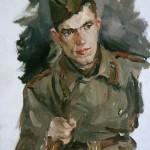
It no longer fazes him to have a grisly old sergeant screaming in his ear, but his palms get sweaty and he can’t say a word when a pretty girl smiles at him.
Is he a man or a boy?
He will eat cold grub covered in dirt and sand and think nothing of it. Bring him a burger with onions he didn’t order, and he’ll pitch a fit.
Is he a man or a boy?
He will run in the rain and push his body until total collapse to carry his load, but if mom asks him take out the trash, he will roll his eyes like a complete brat.
Is he a man or a boy?
He will dive from a plane at eight hundred feet moving three hundred mile an hour without pause, but the site of a needle makes him go weak in the knees.
Is he a man or a boy?
He will attack and kill the enemy with a ferociousness his own mother wouldn’t recognize, yet the site of a suffering child will bring him to tears.
Is he a man or a boy?
He can wade through mangled bodies and untold carnage, but he can’t legally drink a beer to unwind.
Is he a man or a boy?
He’s seen more evil and suffering in a year than most will see in a lifetime, and his favorite reading material is still a comic book.
Is he a man or a boy?
He is selfish, sarcastic, and sometimes down right mean with his buddies, but he will give his life for them as a matter of pure reaction with no thought given.
Is he a man or a boy?
I THINK HE’S A SOLDIER.
Jun
30
“Remember Me”
Filed Under American Patriotism, Family, Fourth of July, Tears of a Warrior, Troops, Veterans, War | Comments Off on “Remember Me”
Oct
12
Dang – These Stats Are Amazing
Filed Under Black Lions, Combat PTSD, Life, PTSD, TBI & PTSD, Tears of a Warrior, War | Comments Off on Dang – These Stats Are Amazing
by Janet J. Seahorn, Ph.D.
As you might imagine, we have been doing research and accumulating multiple types of data for well over ten years. Much has been on PTSD along with statistics on various numbers of vets who served in different wars, as well as their injury and death counts.
Over the last two weeks we have had numerous individuals send us a variety of articles and information on the Vietnam War. Perhaps the most startling was a number that I checked out through several sites; it was a number that claimed only 1/3 of veterans who served in Vietnam are still alive. This number was part of a 2000 census count, so I can only assume the number is far lower ten years later. The actually statement was “Of the 2,709,918 Americans who served in Vietnam, less than 850,000 are estimated to be alive today”.
Yikes. This is a number neither Tony nor I ever expected. Perhaps we don’t want to admit that we are growing that much older. Or perhaps the numbers may show an underlying concern with the health of Vietnam vets who endured massive amounts of toxic chemicals while serving in the war zone. At any rate, the small number of Vietnam vets still living is a real worry.
Another statistic that we have seen is that of the 9,087,000 military personnel who served from August 5, 1964 – May 7, 1975, only 2,709,918 actually served in Vietnam. Of those who were in Vietnam, only around “40-50% either fought in combat, provided close support or were at least fairly regularly exposed to enemy attack” (Bob Beavis, 2010).
And most alarming in a 1995 census around 9.5 million individuals falsely claimed that they had served in Vietnam when they had not; in the 2000 census almost 14 million individuals falsely made such a claim. Yikes, no wonder the Veteran’s Administration is having a harder time trying to identify who did and did not serve when there are so many “false” claimants in America. As my grandmother would say, “Shame, shame, on all of them”.
Last, and this I find very interesting given the amount of press that has been given to the number of Vietnam vets who were supposedly alcoholics, drug users, and homeless, according to various vet sources (VFW Magazine, the Public Information Office…) there was/is no difference between those populations who served in Vietnam and those who did not.
Also, we often hear about how many Vietnam vets ended up in prison… simply not true. Vietnam vets were less likely to be in or served time in prison – only ½ of one percent (Bob Beavis). Over 82% of Vietnam veterans seemed to have made a pretty successful transition to civilian life in spite of dealing with severe injuries and PTSD.
So congratulations all you Vietnam vets; you have lived a truly exceptional life, served your country with honor, and had the incredible strength and internal courage to continue to live life with high principles and personal pride.
May
18
PTSD Series Discussion #2
Filed Under Combat PTSD, PTSD, PTSD treatment, Tears of a Warrior, War | 1 Comment
 Question: 2: Is PTSD different from Combat Stress?
The answer to this question may depend on which study you might read or which doctor is doing the diagnosis. Combat Stress has often been referred to as PTSD. “During the Civil War they called it Irritable Heart. During World War I and II it was referred to as Soldier’s Heart or Shell Shock and other terms described it as Neurosis, Combat Fatigue, or Combat Exhaustion (pp. 66-67, Tears of a Warrior, 2010). Every war has coined a term that seemed to describe a warrior who returned from combat with behaviors and reactions that were not a part of his/her life before the battles. Whatever one might prefer to call the behavior is not important. What is important is if the behavior interferes with the person’s ability to live a normal, happy life or the behavior negatively impacts family, friends, or work, you should get help immediately. Today, PTSD is the accepted medical term for similar symptoms from all wars.
Question 3: If my serviceperson has PTSD, will it better?
Our belief is that those suffering from PTSD can and will get better. Some fortunate few whose trauma is not as intense may be able to heal on their own. Most, however, who have seen too much, done too much, lost too much, may only move towards healing with the outside support of a trained physician or therapist. For many, like my husband, there has been no such thing as a full cure. Nevertheless, appropriate medication, counseling, and self-meditation have been a tremendous help in getting to that “better” place. With “better” understanding of what the person is facing and how those closest to him/her can offer appropriate support, the family can become a safer, stronger and more caring unit. Pretending that nothing is happening or that in some miraculous way tomorrow you will awake and all the bad stuff will be gone, is simply not realistic. It doesn’t just go away, no matter how hard you try. In fact, trying harder often makes the situation worse. The best approach to addressing these ongoing painful ghosts is information, productive action, and the courage to admit something is not quite right. Obtaining the help and treatment needed to move towards better physical and emotional health is the best step to recovery.
Jun
22
A Reunion to Remember
Filed Under Vietnam Reunion | 1 Comment
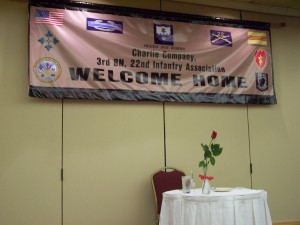 There are all kinds of reunions: high school, family, college, etc. Then there are those reunions that aren’t organized just for celebrations, but more importantly for remembrance, honoring fallen comrades, and healing. The biennium gathering of Vietnam Veterans who served in Charlie Company, 3rd Battalion, 22nd Infantry was one of these. This year it was held in Colorado Springs, CO, and we were invited to be part of the three day events. On Friday we visited Ft. Carson where the group was graciously granted access to several special base training sections including the simulation area where troops were able to practice their shooting skills. Another simulation building housed four look-alike Humvee Vehicles with machine guns, and other high tech equipment. Soldiers practice their driving skills and teamwork prior to deployment (or re-deployment) to assignments in Iraq and Afghanistan. These maneuvers proved far more challenging than any of us ever imagined. It made us realize how incredibly intelligent and efficient our current troops are when being trained for combat. Our young military guides were so enthusiastic about their mission, their work and their willingness to serve their country. Each had been deployed to Iraq or Afghanistan at least once. Many had experienced three deployments with a fourth coming soon. I couldn’t help envisioning the huge sacrifice they were making, as well as the commitment from spouses, children, and parents.
The reunion ended with a banquet on Saturday evening which was far from any I had ever experienced. Before dinner was served, the names of almost one hundred fallen and missing comrades were read by various members of the Regiment. Then, all eyes focused on a round, empty table that sat on the stage with a vase tied with a red ribbon holding a single red rose. A dress military hat sat next to the vase which made the entire scene a poignant reminder of those who would never attend any of these reunions. Since many of our customs and stories are mirrored through metaphors and symbols, I thought you might find the following explanation of the empty table meaningful.
The table is round – to show everlasting concern for our missing men.
The tablecloth is white – symbolizing the purity of their motives when answering the call to duty.
The single red rose – reminds us of the life of each of the missing, and the love ones and friends of these Americans who keep the faith, awaiting answers.
The vase is tied with a red ribbon – symbol of our continued determination to account for our missing.
A slice of lemon on the bread plate – is to remind us of the bitter fate of those captured and missing in a foreign land.
A pinch of salt – symbolizes the tears endured by those missing and their families who seek answers.
The Bible – represents the strength gained through faith to sustain those lost from our country, founded as one nation under God.
The glass is inverted – to symbolize their inability to share the evening’s toast.
The chair is empty – they are missing.
Sometime, perhaps 20 or 30 years from now, the warriors of today will be the old soldiers of tomorrow. Perhaps they will gather to remember, to heal, and to honor those who die in today’s war zones. And likely, they too will honor a single, empty, round table with an inverted glass and a red rose.
May
20
To Honor and Give Thanks
Filed Under American Patriotism | Comments Off on To Honor and Give Thanks
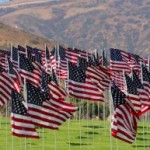 President Barack Obama signed and issued a proclamation designating May 17, 2009 as Armed Forces Day:
“Today, the United States military serves across the world to keep us safe. They are working here at home to protect America from threats foreign and domestic; they are risking their lives in the deserts of Iraq and the mountains of Afghanistan; and they are also serving bravely in many other parts of the world to ensure our security and provide humanitarian assistance. Members of the Armed Forces are forging a better future for our Nation and the world.
As they carry out their missions, military families endure the sacrifice of their absence. Worrying about their safety, moving to new duty stations, and managing a home without a loved one, these families shoulder great burdens as they help sustain our men and women in uniform… The Soldiers, Sailors, Airmen, Marines, and Coastguardsmen who have answered the call to service deserve recognition and gratitude. They have endured the most difficult of conditions to protect America and her highest ideals.”
Last week, Tony and I visited several veteran homes and hospitals to give out copies of our book, Tears of a Warrior. It is always a humbling experience to see the price of Freedom in the broken bodies, minds, and hearts of our fellow military men/women. Not one person complained about his circumstances. Not one of these veterans declared that, if they had to do it over again, he would choose not to serve their country. The price many veterans pay for that service was and is incredible high. It does not end when the war is over. It remains a part of that person’s heart for life. Perhaps, we in the human race will find more appropriate ways to settle our differences. Ways that will not necessitate killing, maiming, and destroying each other. Perhaps, leaders across the world will be able to solve conflicts in a more humane manner. Perhaps, the world will grow more compassionate and caring and peace will actually be a part of every person’s existence. But until that time comes, let us not forget what we, as a nation, owe to those men and women who serve to protect our freedom, our peace, and our families.