BOOK PURCHASE: Discount (above) or PayPal (below)
Click "Buy Now" to continue to PayPal
Click to order eBook - Kindle

Click to order eBook - Nook

Feb
22
Community Event
Filed Under American Patriotism, Human Rights, PTSD treatment, Tears of a Warrior, War | Comments Off on Community Event
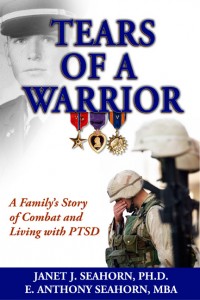
Thought you may be interested to know the Richfield, MN Human Rights Commission is using our book for a community event.
We are very please to learn that “Tears of a Warrior” is generating interest from the general public!
Click on website:
http://www.startribune.com/local/west/116500038.html
Jan
19
The Nightmare Revisited
Filed Under Life, Peace, Today's War, Trauma, War | Comments Off on The Nightmare Revisited

By Janet J. Seahorn
Last year at this time, Tony and I were in Vietnam and Cambodia. It was a humbling, yet inspiring excursion. As Tony stated many times, he did not go there to heal or recreate the war. He wanted to visit, only to see how things had changed, with hopes that the people and the country were mending.
By all outward appearances hope seemed to be occurring. Yet, what keep coming back to me, were the faces of the old women. We did not see the same number of older men, perhaps because many of this age were killed in the war. The women’s faces were not happy. Their features lined with rivers of anger. It was the eyes that held the emotions, and for many, their emotions were tortuous and hate-filled. What haunts me now are the faces I glimpse in the newspapers of civilians in Iraq and Afghanistan; similar looks living in human bodies experiencing similar horrors of war.
As we continue to read of the escalation of suicides of returning military men and women, I wonder if such unforgettable faces are haunting them. Faces of the enemy, faces of their comrades, faces of the children? In the first few blogs of this New Year, I wrote of Peace. Can it be attained in a person’s mind and heart after experiencing so much? I very much want to believe such a peace is possible. For others, the hideous experiences continue to dig deeper ravines into the soul. To heal, even a bit, these gorges must be filled in gradually.
Perhaps not fully, but even building up the crevasses a little keeps one from falling into the yawning depths of depression, anxiety, and hopelessness. As long as one can look up and see the sky, hope is present. It is when one’s existence is swallowed in darkness that even the tiniest light is diminished. Finding ways to keep the sunlight accessible for our returning vets will be the work of everyone: the nation, its people, families, friends, communities, and most importantly, the veteran.
We have troops leaving daily for the war zone, and others returning. A 2008 Rand Corporation study revealed that 300,000 troops who served in Iraq and Afghanistan had Post-Traumatic Stress, while 320,000 reported probable traumatic brain injuries. Both conditions greatly increase the likelihood of attempted suicide. “According to a Congressional Quarterly compilation in late November 2009, 334 active-duty military service men and women have taken their own lives in 2009” (Edward Pages, 2009: The Year of Soldier’s Suicide), and this does not include those military individuals who have been discharged.
Let us all be sure to look into these eyes of freedom and not dismiss the signs of their sacrifice. Peace and healing is everyone’s work; everyone’s answerability. As a nation, it must be our core mission to mend and heal all those that fought in lands where few of us ever think to venture.
I doubt if many of our returning military personnel have rational thoughts of wanting to return to the combat zone. It took almost forty years for us to do so.
One of our favorite veterans, Michael MacDonald, wrote us the other day relating his response to those who frequently ask him if he ever wants to return to Vietnam for a visit. His reply, “Why, I was just there last night.”
And, for many, this statement is all too true. It is those nights without returning that we pray for in our sleep and dreams. It is those nights without revisiting the nightmares that keep us healing.
Dec
24
A Christmas Poem Video
Filed Under American Patriotism | Comments Off on A Christmas Poem Video
-Written by Michael Marks
http://www.youtube.com/watch?v=5_P6yU_ymFM
Dec
8
A Different Christmas Poem
Filed Under American Patriotism, Christmas, Life, Today's War | 1 Comment
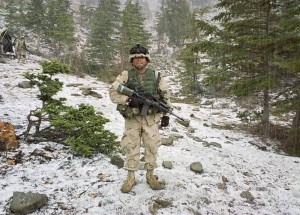
by Michael Marks
The embers glowed softly, and in their dim light,
I gazed round the room and I cherished the sight.
My wife was asleep, her head on my chest,
My daughter beside me, angelic in rest.
Outside the snow fell, a blanket of white,
Transforming the yard to a winter delight.
The sparkling lights in the tree I believe,
Completed the magic that was Christmas Eve.
My eyelids were heavy, my breathing was deep,
Secure and surrounded by love I would sleep.
In perfect contentment, or so it would seem,
So I slumbered, perhaps I started to dream.
The sound wasn’t loud, and it wasn’t too near,
But I opened my eyes when it tickled my ear.
Perhaps just a cough, I didn’t quite know,
Then the sure sound of footsteps outside in the snow.
My soul gave a tremble, I struggled to hear,
And I crept to the door just to see who was near.
Standing out in the cold and the dark of the night,
A lone figure stood, his face weary and tight.
A soldier, I puzzled, some twenty years old,
Perhaps a Marine, huddled here in the cold.
Alone in the dark, he looked up and smiled,
Standing watch over me, and my wife and my child.
“What are you doing?” I asked without fear,
“Come in this moment, it’s freezing out here!
Put down your pack, brush the snow from your sleeve,
You should be at home on a cold Christmas Eve!”
For barely a moment I saw his eyes shift,
Away from the cold and the snow blown in drifts..
To the window that danced with a warm fire’s light
Then he sighed and he said “Its really all right,
I’m out here by choice. I’m here every night.”
“It’s my duty to stand at the front of the line,
That separates you from the darkest of times.
No one had to ask or beg or implore me,
I’m proud to stand here like my fathers before me.
My Gramps died at ‘ Pearl on a day in December,”
Then he sighed, “That’s a Christmas ‘Gram always remembers.”
My dad stood his watch in the jungles of ‘ Nam ‘,
And now it is my turn and so, here I am.
I’ve not seen my own son in more than a while,
But my wife sends me pictures, he’s sure got her smile.
Then he bent and he carefully pulled from his bag,
The red, white, and blue… an American flag.
“I can live through the cold and the being alone,
Away from my family, my house and my home.
I can stand at my post through the rain and the sleet,
I can sleep in a foxhole with little to eat.
I can carry the weight of killing another,
Or lay down my life with my sister and brother..
Who stand at the front against any and all,
To ensure for all time that this flag will not fall.”
“So go back inside,” he said, “harbor no fright,
Your family is waiting and I’ll be all right.”
“But isn’t there something I can do, at the least,
“Give you money,” I asked, “or prepare you a feast?
It seems all too little for all that you’ve done, For
being away from your wife and your son.”
Then his eye welled a tear that held no regret, “
Just tell us you love us, and never forget.
To fight for our rights back at home while we’re gone,
To stand your own watch, no matter how long.
For when we come home, either standing or dead,
To know you remember we fought and we bled.
Is payment enough, and with that we will trust,
That we mattered to you as you mattered to us.
Please, would you do me the kind favor of sending this to as many people as you can? Christmas will be coming soon and some credit is due to our U.S service men and women for our being able to celebrate these festivities. Let’s try in this small way to pay a tiny bit of what we owe. Make people stop and think of our heroes, living and dead, who sacrificed themselves for us.
LCDR Jeff Giles, SC, USN
30th Naval Construction Regiment
OIC, Logistics Cell One
Jun
2
Fears, Tears, and Funny Facts
Filed Under Tears | 4 Comments
 It is Saturday morning and my alarm clock wakes me up. I really want to sleep until my body’s time clock rouses me, but we are going to Cheyenne to watch, listen, and learn how parents, spouses, and community members are dealing with the recent deployment of their 5-state National Guard unit. From 9 in the morning until 2 in the afternoon we heard from spouses, parents, friends, and others who had experienced prior deployments or had a loved one who is now a part of this current operation. Each story was told from a different perspective, yet all voiced similar sentiments of fear, worry, and concern for how to deal with every day life without their loved ones. They talked of pride for the service and dedication the soldiers are giving for their country. Below are just a few of their narratives.
- The Brigadier General gave the introduction of his own earlier deployment and how it made him more appreciative for the beauty of the common landscape of Wyoming. The freshness of new grasses in a meadow. The smell of wildflowers and warm sunshine instead of Iraq’s dust and withering heat. And, as he was driving to the meeting, he had the special gift of seeing a mother antelope give birth to its newborn fawn. From the dreadfulness of the combat zone to the miracle of new life, one is constantly reminded of the beauty of America.
- A husband and wife chatted about their experiences. The discovery of hidden strengths, the challenges of fixing leaky pipes and broken cars, and the difficulty of not being able to see and hold one another at the beginning and end of each day. Other funny facts they shared:
- How the military takes care of every need and item in your life including your relationships, “If we wanted you to have a wife, we would have issued you one.”
- MRE which is the acronym for “Meals Ready to Eat” to what he thought they really are – “Meals Refusing to Exit”
- Another spouse spoke of how she now refuses to attend any “good-bye” ceremonies. She has done this before and learned that, for her, it was far better to say her farewells at home. Watching the panic of small children holding onto their parent’s pant legs and crying, “Please don’t leave me”. Wives weeping, sad faces, the combat exit…all were a bit too much. She gave herself and others permission to make choices that preserve their fragile emotional state.
- One young women told of how, shortly after she learned that her husband would be deployed for a second time, had a devastating stroke. She is working her way back to health with the support of family and friends. It is important that her husband not worry about how she is healing while he needs to be focused on completing and surviving his mission in Iraq and Kuwait.
Yes, the stories and the story tellers are linked together by their common situation, a situation of having a loved one living in a combat zone thousands of miles from home. A situation which requires those left at home to be braver, stronger, more responsible and independent than ever before. It seemed as if a mantra could be heard throughout the day: “I’m handling it – whatever “it” is or will be.” And they are not alone, for going through the next year will be easier with a solid base of friends, families, supportive communities, and the attentive resources from the military.
May
29
Where are you?
Filed Under American Patriotism | Comments Off on Where are you?
 It was early in the evening, a time when most of us were looking forward to some rest and dinner with our families. A time when we finally had a few minutes for conversation and catching up on each other’s day. In an American town, the police were responding to a domestic disturbance where they arrested a young man who was later charged with drug possession. The drug was an anti-anxiety medicine. Unfortunately, the prescription was not in this person’s name. Opps! This became a Class C felony for a young veteran whose picture of his Iraq experience appeared on Time magazine only weeks before.
For him, like many vets, the combat zone was never far from his mind and heart. Upon returning home, problems continued to plaque the young man. He had difficulty keeping a job, couldn’t seem to stay away from drugs and alcohol, ended up in jail on more than one occasion, and become divorced within two years. Living became too torturous to bear until finally his mother received the news that no mother ever wants to receive.
She had to bury her son too young, too soon.
Stories like this are more numerous than many Americans recognize or acknowledge. An article from the McCormick Foundation stated, “Statistics indicate that approximately 300,000 veterans who have returned from Iraq and Afghanistan suffer from post-traumatic stress disorder (PTSD) or major depression, and about 320,000 may have experienced traumatic brain injury (TBI) during deployment (Lisa H. Jaycox and Terri Tanielian, Invisible Wounds of War, Rand Corporation, 2008).” The battle for peace of mind becomes even more challenging for many military individuals upon returning from war. Most never talk about their experience. Most rarely let others see how complicated it is to live a “normal” existence. Most never complain.
So think about when a warrior dies alone on a battle field far from home, where are you? When he/she returns home and can’t sleep at night because of the flashbacks and nightmares, where are you? When a mother weeps for a son or daughter she will never again hold in her arms, where are you? When a vet is living homeless on your city’s streets because he can’t seem to hold a job or clear his head of the dreadful memories, where are you?
For most, you are at work, at home, on vacation, living your life in a fairly peace-filled manner, even given our current economic upheaval, you are free. You are safe. And you are whole in mind, body, and spirit. Our veterans gave all of that up for you, for me, for others around the world. Be sure to thank a vet. Be sure to say a prayer for their healing. Oh, and extend a Thank You to the family, because everyday they are giving up their own sense of peace and well-being.
Jan
30
Healing Ain’t Easy
Filed Under Treating PTSD | Comments Off on Healing Ain’t Easy
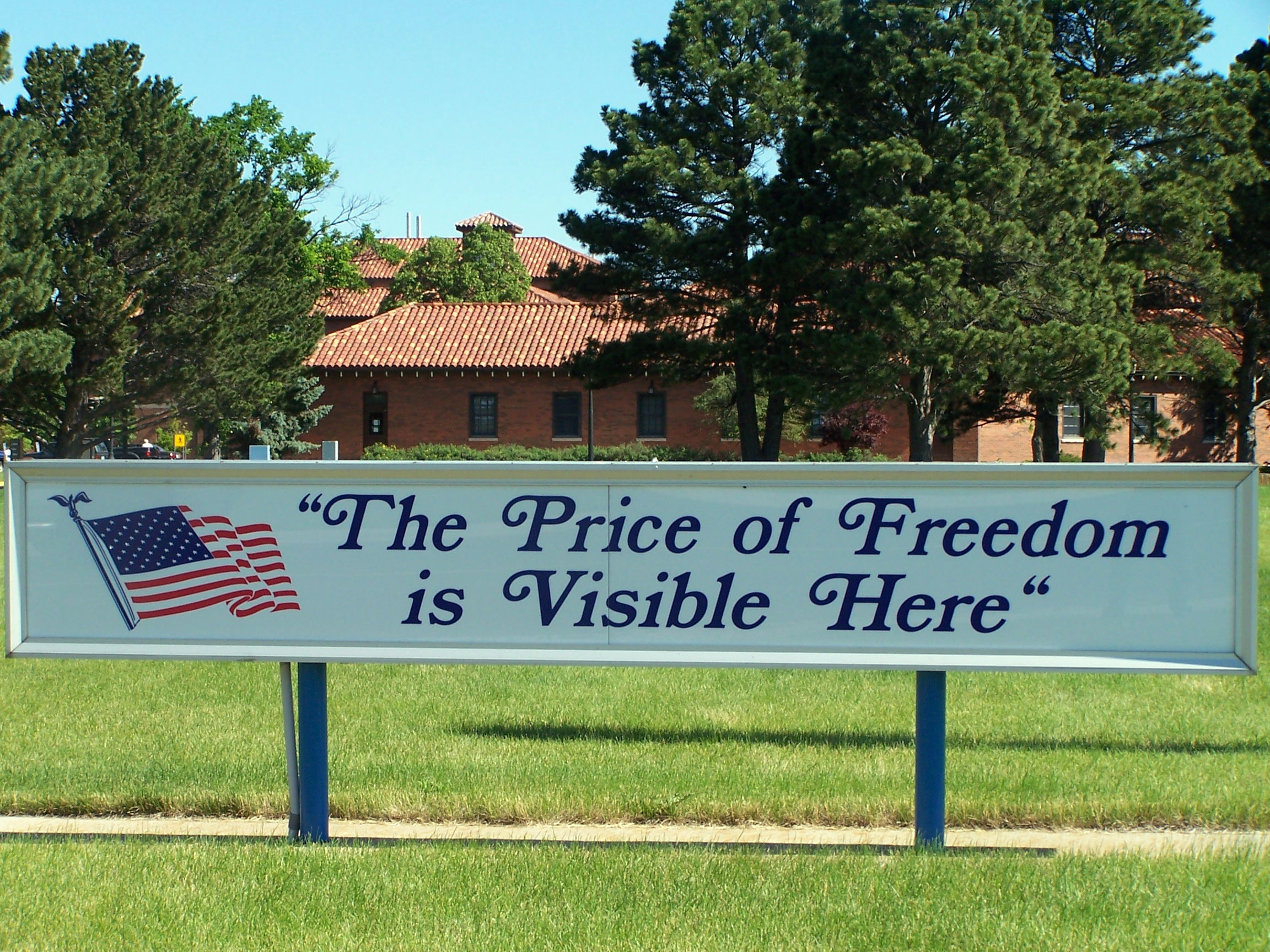
Va Hospital - Cheyenne, WY
Hello everyone. We have been back from our trip to Vietnam/Cambodia for ten days now. Getting our sleep patterns to normalize has been more challenging than getting our daily routines into a new rhythm. Before we left, I mentioned that we learned a few breathing strategies to use just in case Tony was triggered by a sight, sound, smell… from combat. Tony admitted that the breathing was useful on a few occasions, but he never felt that any of the experiences were overwhelming – another milestone in the lifetime journey of healing. Yea! Yesterday, we went to Cheyenne for a second session of EMDR (Eye Movement Desensitization and Reprocessing) with a veteran’s service therapist. EMDR has been used since the 1980’s with individuals who have experienced a wide range of traumatic events ranging from car accidents, rape, domestic violence… and combat PTSD. The purpose of EMDR is to help the individual reprocess the event in a manner that is not as emotionally volatile, thereby, reconciling the experience into something that is more acceptable to the sufferer. Truthfully, we do not know if this particular type of therapy will work with Tony’s PTSD, but it is worth a try. We know of many non-vets who have told us stories of how EMDR helped them. Since I am being allowed to be part of these sessions, I have already had a few significant Aha moments. The first is getting the patient to move from a cognitive processing mode (in the head) to a feeling mode (in the body), which can be incredibly difficult. Modern man (and woman) has an enormous need to control his environment. It makes us all feel a bit safer when we believe in this illusion of “control”. To move from analyzing everything we experience through our heads and think about how our body is responding; i.e., anxiousness, faster heartbeats, headaches, stomach cramps… is something not many of us think about on a regular basis. In fact, we often take a pill to make the emotional cramping go away. EMDR’s focus is on the “body feeling”. In neuroscience terms, it is an attempt to get both body and mind in closer alignment which, hopefully, allows a person to live in a healthier state of being. The second Aha for me was this: The full impact of a stressful event isn’t when the traumatic event took place, i.e., the utter horror of combat, the killing, the IED explosion…It begins far before that event. It begins before the person landed in the foreign country, got into the car, or encountered the threat. All of the sensory information that came before the actual event were also encoded into the body/brain. So Tony’s beginning started when he received his orders to go to Vietnam: as he boarded the plane, when he first walked off the plane, and when he was being processed in Vietnam for his combat assignment. Wow, what a revelation this was to both of us. I thought that we were only dealing with the trauma from the really terrible experiences. No wonder this thing we call PTSD is so powerful and full of ghosts. It began sooner and there were more ghosts than we ever imagined. No wonder so many vets aren’t excited about therapy. It is enormously difficult, scary, and unsettling work. Not only does it take huge amounts of courage and persistence, it takes a strong support system to stand beside, listen, and observe the wounded. This part of the healing journey may be more complex than we ever thought. I’ll keep you posted as we take one small step at a time. I’m thinking this may be a good time to stock up on comfort food and lots of dark chocolate.