BOOK PURCHASE: Discount (above) or PayPal (below)
Click "Buy Now" to continue to PayPal
Click to order eBook - Kindle

Click to order eBook - Nook

Jun
6
I AM
Filed Under Civilian life, Combat PTSD, Life, Love, Peace, PTSD, Tears of a Warrior, Treating PTSD, Veterans | Comments Off on I AM
by Janet J. Seahorn, Ph.D
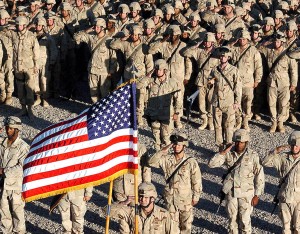
For many of our military men and women who return from combat there is a burning question; a question that asks, “Who am I?” Who am I now that I have seen so much, done so much, and heard the despair of so many? For some there may be a feeling of unworthiness, a gnawing numbness of pain. They seek answers that seem to elude them; answers hidden somewhere between the battle fields and the present.
Every person wants to be validated in the world: to be seen, to be heard, to be felt. Returning from war often leaves a person with a sense of invisibility. A feeling that adds to the question, Who am I … this other person who wanders a world that once was so familiar now feels like a drifter in a land that may not seem recognizable.
Know this one simple truth, You are worthy of love. You are worthy of goodness. You are worthy of a life of joy and personal fulfillment. The trick is not that others view you as worthy. You must believe this for yourself. “You are responsible for your life”. And only You can create and live such a life. You alone must believe that you are worthy to live a good life and a life of meaning.
Combat can take one’s sense of self, but it does not take away one’s need to be a part of something, some mission, some worthy cause. The heartbreaking reality for many veterans is returning from battle with a frame of mind of being untrained to live in civilian society. You will need to work hard to find your path in this world after combat. No one can do this for you. It is a journey each individual will need to travel and seek out.
Some doubt they are up to the challenge. This is purely self deception. If you could be trained to perform all of the incredible feats of a skilled warrior, you certainly have the strength, intelligence and willpower to succeed in becoming your very best “I AM”. The gift has always been yours. It was bestowed on you at birth. The outside world may work hard to convince you otherwise. Some days it may be tempting to give up the search. But carry on. In your hands lies the power to choose.
Choose to accept your very best I AM.
Feb
2
A HUMBLED JOY
Filed Under American Patriotism, Civilian life, Combat PTSD, Family, Life, Love, PTSD treatment, Tears of a Warrior, Treating PTSD, War | Comments Off on A HUMBLED JOY
by Janet J. Seahorn, Ph.D
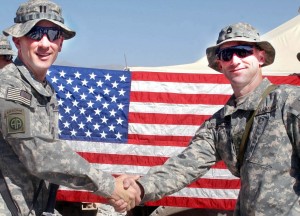
They stood before us, this beautiful, young couple. He had just returned home from a tour in Afghanistan, his second time away. They had many things they could have done that would have been much more fun than taking time to visit with us.
She was a student in my fall semester course at the University. At the beginning of the new semester she let me know her husband would be returning home soon and she wanted Tony and me to meet him. Just the request was a humbled joy. Actually meeting them on that cool winter day even meant more.
During our short time together, we did not talk much about his experiences at war except to listen to a few short phrases indicating he had been in some difficult situations.
I didn’t mention that his wife had to take an “Incomplete” for the college course because she became seriously ill and spent several days in the hospital. Somehow, all of this was now unimportant. The only thing we noticed was how the two people standing before us just couldn’t stop smiling and giggling continually as they held hands, grateful to finally be together.
My goodness, this was truly the picture of humbled joy.
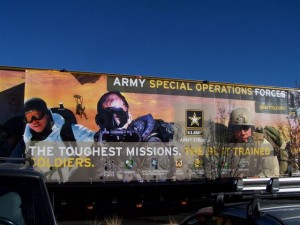
That same day we spoke with an army Special Forces warrant officer who was helping to show students on campus the various skills and equipment used in the military. The young man explained that he had been in the army for sixteen years, joining-up right after high school. Honestly, he didn’t look like he was that old; he smiled widely when I shared my observation with him.
He talked about how joining the military at age seventeen was the best thing he has ever done. The army, he noted, gave him direction, guidance, and supported his development as a confident adult. The interesting detail about our conversation was how much I learned in a short time about his confidence as career military person.
At the beginning of our chat I asked how many times he had been overseas; five – six times if you counted a stint in Romania. The duration of each tour was between three and eight months depending on the mission. During several of his assignments he experienced the reality of war, including several casualties within his unit.
Yet, in spite of the stress, he seemed to be coping with the emotional and physical side effects of combat pretty well. It was challenging, he noted, to reintegrate into “normal” life on each return home, but the army gave him plenty of support and time to decompress.
He pointed out that on several occasions he was given a lengthy mental survey of over 115 items which sometimes highlighted his PTSD tendencies. Nevertheless, because he was career army, his adjustment process appeared to be faster and more comprehensive than veterans who left the service shortly after returning from battle. There does seem to be some significant benefits for the men/women who are in the military long term.
Perhaps being in a community of individuals who have experienced similar battle conditions helps the healing and understanding process. Being around other soldiers who can identify with the pain of combat; others who quietly appreciate the sacrifice of serving our country may lessen the feelings of emotional trauma of being alone in a world where most people haven’t experienced war. This, by itself, would be an immense relief because one wouldn’t have to pretend everything is OK when it isn’t. You wouldn’t have to go through each day feeling lost and alone because there would be a band of brothers surrounding you with knowledgeable support. At any rate, this young soldier certainly gave me some things to think about.
Humbled Joy, invisible, yet real. Thank you.
Nov
2
THE EYES OF TRAUMA
Filed Under Civilian life, Combat PTSD, Life, Tears of a Warrior, Trauma, War, Wisdom | Comments Off on THE EYES OF TRAUMA
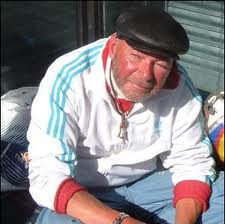
A face conceals many things through silent smiles and quiet words. Yet eyes speak silence louder, clearer than any verbal language. The mouth can easily fake joy, and talk can be nothing more than convincing noise. But the eyes, the eyes can’t fake unfelt laughter or peace. The eyes tell their own story. A story that sometimes screams of sadness; a story that carries the pain of guilt and desperation; a story burdened by trauma inflicted by war, abuse, or neglect.
Perhaps this is why few people are strong enough to stare into another’s eyes without looking away. When doing so we are really checking for evidence that what is said matches what is unsaid. Only eyes can confirm such a truth. We listen more fully, not just with our ears, but with our eyes. Deep listening is what many psychologists such as Daniel Siegel refer to as “feeling felt”. Feeling Felt tells the story teller that he/she matters. That his/her experiences are valued and honored.
Why would I write a blog about eyes? Simple, many, many beings are walking through our world with silent screams. No one seems to notice or take time to pay attention. Few things in life are harder for a human being to sustain than being invisible to others. Homeless people understand, abused children understand, and traumatized vets understand.
Next time you see someone whom you suspect may need to be seen, be brave enough and care enough to listen to what the eyes are saying. It is a humbling tribute that a person has placed his/her trust in your willingness to be with them, even for only a small amount of time.
Sep
16
The Strength of One
Filed Under Civilian life, PTSD treatment | 6 Comments
-by Janet Seahorn
It had been several months since I last saw him. The end of last semester during finals to be exact. He had been a student in one of my university classes. He was a big, strapping, young man who almost always had a smile on his face and some funny comments to amuse his table mates.
Before that semester began, I knew that several of my new students were National Guard or had served in the military; he was among them. On one occasion, he told me that he had been on active duty and had just returned from a tour in a war zone. Iraq one day, and the next day he was signed up and attending classes at the university. No transition time whatsoever. Yet, he seemed to take it all in stride. He even joined a fraternity.
A few times I had spoken with him about some of his experiences and asked if he knew anything about Post Traumatic Stress. Without much dialogue he nodded and mentioned that he had some symptoms but he was coping quite well. And by all outward appearance and on most days he was fine. Only a few times did I recognize the demons had visited him, but thankfully, they didn’t seem to stay very long.
The semester wore on without much concern until the last month when he was absent a few times – until then he attended every class and only missed on rare occasions. One absence occurred the first day of class. He had e-mailed me ahead of time to let me know he would be missing that session because he was attending the funeral of one of his best friends. Only later did I learn the funeral was a young marine who had been in our local papers and had recently died in Iraq.
The marine had been a close high school friend. They had been star players on their football team, shared Saturday night outings built on a foundation of boyhood friendship.
After our “catch-up” talk, he mentioned that the summer had been tough. He had an accident which broke some bones in his ankle. He could not participate in all of the fun activities that had anticipated during the school year. Given the pain and the down time of recuperation, the memories resurfaced; the trauma of his tour of duty in Iraq, what he saw and had to cope with, the decisions he had to make on a daily basis – returned to haunt him.
Typical of his strong personality, he downplayed most of the symptoms. Yet, this is an intelligent young man. He did not dismiss the symptoms and stated that he was getting help for his PTSD. Just knowing this put my mind at ease. I could only imagine what courage it took to take this step. Hopefully, other vets who know him will follow his example. He will get better – faster, in a healthier manner.
Just a side note: I no longer choose to call this a “disorder”. It seems to me the more I learn and understand this phenomenon, the more I believe that PTS(D) is the minds/body’s incredibly creative way to deal with an unusually horrendous life event.
Had the mind not employed the immediate reaction of numbing and stuffing the event, the person may have died. To avoid the ultimate death sentence, the mind/brain made a split second decision to unconsciously remove itself from the trauma until a later time; a time when the body was safe to explore the event without being in the line of fire.
Pretty amazing and effective when you think about it. If the brain wasn’t such a protective, innovative problem solver many of us would not be around today. Yea, for our amazing brain. Maybe it is not “disordered” at all, just creatively restructured for a bit.
In a few weeks I will attend a conference on Traumatic Brain Injury (TBIs). Of course I will be writing about this experience and sharing some of the information with our blog readers. Stay tuned.
Jul
10
You Can’t Tell a Hog What to Do
Filed Under Civilian life | Comments Off on You Can’t Tell a Hog What to Do
 The women gathered to talk about living with husbands who had served their country years ago during the Vietnam War. They were from throughout the United States and worked in a variety of careers. They were mothers, teachers, business owners, and even farmers.
During the morning session, we discussed the challenges of being in a relationship with a spouse who had experienced the trauma of combat – the killing, the living and the dying. Several of the veterans had been “tunnel rats”, those individuals whose job was to slither down the narrow passageways in search of Viet Cong. The tunnels allowed the enemy to pop-up out of nowhere and ambush American troops. Many believed the job of the tunnel rat was one of the most dangerous and scary assignments in Vietnam.
Several participants told stories of how the war did not remain overseas, but seemed to follow the vet back home.
Orders were still shouted, commands were given at all times of the day and night, and immediate compliance was expected. The deep battle scars of many warriors still remained.
I mentioned this phenomenon in our book, Tears of a Warrior. How my sons and I never quite understood the condition. In fact, we never fully realized that we walked a fine line between soldiers in combat and family. Our perceptions of how to respond to Dad were not the same as his. As one might imagine, such a scenario did not always produce a tranquil home environment.
Toward the end of the discussion, one lady explained to the group how it wasn’t her husband who had the most difficulty adjusting to home life, it was her.
You see, she explained, she ran the farm while he was away. She had to take care of the crops, fix the barn when it leaked, repair any broken appliances, and feed the animals, especially the pigs.
When her husband returned after being gone over a year, he kept asking why she did certain tasks in a manner unfamiliar to him. Her dilemma was to become more flexible in allowing him to reintegrate into the farm tasks, and not expect him to do things “her” way. Most of the farm duties were just fine after awhile, except one. It seemed the hogs weren’t terribly fond of the “new” farm hand and much preferred the lady as their primary feeder.
For any of you who aren’t familiar with farming and hog behavior, the only piece of information you need to know is that you don’t mess with a hungry, snorting hog.
Feb
26
Transitioning from combat to college
Filed Under Civilian life | Comments Off on Transitioning from combat to college
Returning combat vets who enter college can find the transition from combat to college to be difficult. Wenatchee Valley College in Washington offers an innovative way to allow veterans to gradually ease in to civilian life. Veterans have their own study house/lounge and are members of a group called STAVE (Student Transitional Assistance for Veterans’ Education.) STAVE was started by local veterans to help bring understanding about veteran students to faculty and other students. In addition to fundraising efforts to help needy families, the group arranges for counseling, financial assistance and tutoring for vets trying to get through school.
You can read the original story here.